musings & critique about hi-tech, academia, building startups, and a journal to building eKita
Wednesday, January 2, 2013
I had to write a reply to this post on quora...
First of which is that "startups" implies only the US market. Typical silicon valley syndrome (you ignore the rest of the world, where many bigger things are happening). I've built some companies in the valley so I know this too.
Secondly, that edtech (or what people who have never done anything in edtech before believe is edtech) is indeed a new "trend" in the valley. It isnt in the majority of the world however. Not out of the ordinary in any case (edtech has always been a relatively popular tech topic in other technology hubs around the world). Edtech is in fact the furthest behind in the states, so this is literally a very common california gold rush syndrome of people realizing the massive market that is untapped in the states. (Education is one of the top 3 industries in the world - the only industry in the top 20 list without a full technology solution yet, ie: education is still predominantly paper-based rather than digital. Remember when we changed that in med-tech what a big paradigm shift it was?)
Third - what is the definition of edtech?
This is one of the biggest problems right now with the majority of the startups you are talking about. The problem is simple: they dont have any experience in education, they fail to spend enough effort researching and working in academics, and ultimately have no idea what the actual edtech industry is to begin with in building their "solutions". So yes it is another bubble, happening predominately in the states (where bubbles tend to happen), and we all know what happens with those bubbles.
So lets look at edtech now since I brought this up.
Edtech needs to be understood. Just like medtech, biotech, & cleantech - edtech is a different industry. It is a problem space requiring a massive understanding and experience to properly approach. Just like a medtech startup would be viewed as insane if they didnt have doctors and researchers on their team specific to the problem they are solving - so to are edtech companies who set out without founding members who are educators and academics.
What we are seeing right now is instead, hi-tech (a different industry, all together) entrepreneurs coming at edtech and trying to build edtech solutions in the hi-tech manner.
This is not what edtech is.
That is why all of these online learning platforms - while great and interesting - really have nothing at all to do with edtech. They are not technology catered to, or useful for, actual teachers & students in classrooms, undertaking actual education. In fact they completely ignore the classrooms and are attempting to make virtual classrooms OUTSIDE the classroom. Which in turn creates an industry of its own, and puts pressure on the education industry because previously, well, there was no competition.
So in retrospect I am very very glad for these approaches. They bring in new paradigms to education and help open it up for the world. Something we at eKita are all about.
However, we are solving the actual industry of education technology. So we are happy to be in this space because there are literally, very very few others out here.
We are not building another MOOC or online learning platform - these are not edtech, and should not be called so.
The real edtech projects that are most progressive are being built (and have been built for over 15-20 years) in European universities. We think its time a company dedicated to this vision be built so that a real edtech solution can go global. Thats what we are building at eKita.
My CTO previously built one of these edtech platforms in a joint Austrian Swedish university collaboration. A CLMS called sTeam. (It was built in Pike, a programming language he also contributed to and wrote the book on.) It has been in use as the CLMS in many of these universities as well as many in China for over a decade now and is more advanced actual ed-technology than anything you will see in mainstream US (definitely makes moodle, blackboard, etc look lke the garbage it is). What is currently being undergone with us at eKita is to build an ed-tech future that has much more than just CLMS functionality.
As stated however we are building a solution for the actual education industry. Taking into consideration the new paradigm of online learning as a valid educational resource - but these startups preaching that online education will replace the classroom are simply insane, and damaging for society.
Online education cannot and never will be able to provide many of the necessary functions of a physical face-to-face academic institution. It shouldnt try to. Yet this is the mission-statement for many of these startups. Which should be putting up massive red warning flags for all of us interested in an actual education proponent in our societies. If you look at the top education markets in the world (the US is #22 and drops every year so its not even close), these online learning platforms are not given nearly as much press or attention. In fact they really dont get any. Why? Because they dont do very much - if anything - that the current education & edtech solutions in use dont do. In Scandinavia and most of western europe there already are better solutions than what these online courses offer (typically in both classroom and digital format).
Even in large swaths of Asia (where the real future market is) - and Asian societies are actually incredibly serious about education (as much as 70% of household income is spent on education in many Asian families - compared to an average 5% in the US where parents typically complain about the cost of school supplies at $400 a year - less than what many of them will spend on beer or cigarettes).
So again - I am trying to answer a question by actually adding some insight and correction to the question itself, which is hard. If you look at education industry however you shouldnt be looking at the US for answers. The US is behind. Far behind. Trying to make solutions for the US ed market will irrevocably be repetition of what's already been solved in many other ed markets. Thats not to say it wont hit off (in the US) - but it wont change the world. The US is not the world, afterall - and in education its a very small player in this world.
I know its not in everybody's interest to spend 15 years as an academic in 10 countries like I have but if you really want to understand what education technology is, there's definitely better places to be coming from than hi-tech (in the US). Start looking at classrooms, institutions, Ministries of Education, progressive new schools like projectpolymath - and understand their problems, and of course function in society.
A real edtech solution cannot be built without strong connections and understanding of these components - and why should it?
Something very important about the educational industry is accountability. Educational content needs to be accountable - teachers are responsible, their schools are, their MoE's and governments are. In the global academic community (which is one of the most globally connected industries in the world - and always has been - academics invented the WWW btw) accountability is the most crucial element.
These online learning platforms dont solve that. In fact the majority of them create a bigger problem - unaccountability in "education".
I do not believe "changing the world" is meant to ignore the current workers of one of the 3 largest industries in the world and claim to be replacing it with something else.
Thats just madness.
Any real solution, is an actual solution for the people having the problem. Not an attempt at removing the people with the problem and instead putting in a machine.
But that is what the majority of these self-called "edtech" startups are doing. Mission statement and all.
A good question to ask in building a new venture is of course: how big of a real problem do we solve?
But another one that few tend to ask is: in solving our problem, what others do we make?
Changing the world is about improving what we have. If we can do so drastically, all the better. Destroying what we have to make change, is not, however, progress. It is stagnation.
I argue that the majority of these startups dont realize or even stop to think of the big problems they are causing to society by pushing their agenda of - literally - the destruction of the educational proponent of society.
This is why in the top ed markets in the world, these startups get little to no press or attention - because people already have better solutions, and have no interest in destroying their ed markets which are much more functional and replacing them with unaccountable online platforms.
Why is education so hot right now? Is it overrated or justified?I have to first say that your question makes alot of assumptions.
Edtech startups are pretty trendy right now and are getting a lot of press. What are the pros and cons of the online education industry, with numbers?
More importantly, is the growth going to die soon, or increase even more.
First of which is that "startups" implies only the US market. Typical silicon valley syndrome (you ignore the rest of the world, where many bigger things are happening). I've built some companies in the valley so I know this too.
Secondly, that edtech (or what people who have never done anything in edtech before believe is edtech) is indeed a new "trend" in the valley. It isnt in the majority of the world however. Not out of the ordinary in any case (edtech has always been a relatively popular tech topic in other technology hubs around the world). Edtech is in fact the furthest behind in the states, so this is literally a very common california gold rush syndrome of people realizing the massive market that is untapped in the states. (Education is one of the top 3 industries in the world - the only industry in the top 20 list without a full technology solution yet, ie: education is still predominantly paper-based rather than digital. Remember when we changed that in med-tech what a big paradigm shift it was?)
Third - what is the definition of edtech?
This is one of the biggest problems right now with the majority of the startups you are talking about. The problem is simple: they dont have any experience in education, they fail to spend enough effort researching and working in academics, and ultimately have no idea what the actual edtech industry is to begin with in building their "solutions". So yes it is another bubble, happening predominately in the states (where bubbles tend to happen), and we all know what happens with those bubbles.
So lets look at edtech now since I brought this up.
Edtech needs to be understood. Just like medtech, biotech, & cleantech - edtech is a different industry. It is a problem space requiring a massive understanding and experience to properly approach. Just like a medtech startup would be viewed as insane if they didnt have doctors and researchers on their team specific to the problem they are solving - so to are edtech companies who set out without founding members who are educators and academics.
What we are seeing right now is instead, hi-tech (a different industry, all together) entrepreneurs coming at edtech and trying to build edtech solutions in the hi-tech manner.
This is not what edtech is.
That is why all of these online learning platforms - while great and interesting - really have nothing at all to do with edtech. They are not technology catered to, or useful for, actual teachers & students in classrooms, undertaking actual education. In fact they completely ignore the classrooms and are attempting to make virtual classrooms OUTSIDE the classroom. Which in turn creates an industry of its own, and puts pressure on the education industry because previously, well, there was no competition.
So in retrospect I am very very glad for these approaches. They bring in new paradigms to education and help open it up for the world. Something we at eKita are all about.
However, we are solving the actual industry of education technology. So we are happy to be in this space because there are literally, very very few others out here.
We are not building another MOOC or online learning platform - these are not edtech, and should not be called so.
The real edtech projects that are most progressive are being built (and have been built for over 15-20 years) in European universities. We think its time a company dedicated to this vision be built so that a real edtech solution can go global. Thats what we are building at eKita.
My CTO previously built one of these edtech platforms in a joint Austrian Swedish university collaboration. A CLMS called sTeam. (It was built in Pike, a programming language he also contributed to and wrote the book on.) It has been in use as the CLMS in many of these universities as well as many in China for over a decade now and is more advanced actual ed-technology than anything you will see in mainstream US (definitely makes moodle, blackboard, etc look lke the garbage it is). What is currently being undergone with us at eKita is to build an ed-tech future that has much more than just CLMS functionality.
As stated however we are building a solution for the actual education industry. Taking into consideration the new paradigm of online learning as a valid educational resource - but these startups preaching that online education will replace the classroom are simply insane, and damaging for society.
Online education cannot and never will be able to provide many of the necessary functions of a physical face-to-face academic institution. It shouldnt try to. Yet this is the mission-statement for many of these startups. Which should be putting up massive red warning flags for all of us interested in an actual education proponent in our societies. If you look at the top education markets in the world (the US is #22 and drops every year so its not even close), these online learning platforms are not given nearly as much press or attention. In fact they really dont get any. Why? Because they dont do very much - if anything - that the current education & edtech solutions in use dont do. In Scandinavia and most of western europe there already are better solutions than what these online courses offer (typically in both classroom and digital format).
Even in large swaths of Asia (where the real future market is) - and Asian societies are actually incredibly serious about education (as much as 70% of household income is spent on education in many Asian families - compared to an average 5% in the US where parents typically complain about the cost of school supplies at $400 a year - less than what many of them will spend on beer or cigarettes).
So again - I am trying to answer a question by actually adding some insight and correction to the question itself, which is hard. If you look at education industry however you shouldnt be looking at the US for answers. The US is behind. Far behind. Trying to make solutions for the US ed market will irrevocably be repetition of what's already been solved in many other ed markets. Thats not to say it wont hit off (in the US) - but it wont change the world. The US is not the world, afterall - and in education its a very small player in this world.
I know its not in everybody's interest to spend 15 years as an academic in 10 countries like I have but if you really want to understand what education technology is, there's definitely better places to be coming from than hi-tech (in the US). Start looking at classrooms, institutions, Ministries of Education, progressive new schools like projectpolymath - and understand their problems, and of course function in society.
A real edtech solution cannot be built without strong connections and understanding of these components - and why should it?
Something very important about the educational industry is accountability. Educational content needs to be accountable - teachers are responsible, their schools are, their MoE's and governments are. In the global academic community (which is one of the most globally connected industries in the world - and always has been - academics invented the WWW btw) accountability is the most crucial element.
These online learning platforms dont solve that. In fact the majority of them create a bigger problem - unaccountability in "education".
I do not believe "changing the world" is meant to ignore the current workers of one of the 3 largest industries in the world and claim to be replacing it with something else.
Thats just madness.
Any real solution, is an actual solution for the people having the problem. Not an attempt at removing the people with the problem and instead putting in a machine.
But that is what the majority of these self-called "edtech" startups are doing. Mission statement and all.
A good question to ask in building a new venture is of course: how big of a real problem do we solve?
But another one that few tend to ask is: in solving our problem, what others do we make?
Changing the world is about improving what we have. If we can do so drastically, all the better. Destroying what we have to make change, is not, however, progress. It is stagnation.
I argue that the majority of these startups dont realize or even stop to think of the big problems they are causing to society by pushing their agenda of - literally - the destruction of the educational proponent of society.
This is why in the top ed markets in the world, these startups get little to no press or attention - because people already have better solutions, and have no interest in destroying their ed markets which are much more functional and replacing them with unaccountable online platforms.
Labels: Asia, edtech, education, education technology, edutech, Europe, USA
Friday, August 17, 2012
I've known a long time about the Finnish Model of education - as I am not only Scandinavian as well - but from Finland's closest neighbor: Sweden.
A fact that bears more semblance than just geography, too - (secondary national language of Finland: Swedish; and Finland itself used to be Swedish territory).
But history or national prestige isnt why I am writing this - in fact the real prestige out of this article will undoubtedly go to Finland, and you will soon discover why.
I will take a moment to divulge what was written at the bottom of this post however:
To continue onto my point however, with the article above in mind, the whole goal of educators wherever they are is to in fact improve their models, efficiency, and results - is it not?
So - call it obvious if you will (though it is apparently not obvious enough that it's happened - food for thought) - but: why not create a platform or channel of communication whereby educators can share those methods that in fact work the best? And the content created by them?
I'm touching again, of course, on the crucial goal we at eKita have to creating a global platform by which the world's academic standard will be increased by simple means of exposure, collaboration, and sharing of resources, tools, & methods by the worlds teachers.
When teachers are able to share across borders seamlessly - which of course is the reason the WWW was invented in the first place - there is a drastic measure of improvement in student results. I argue that this improvement can even take place when local policy isn't the same on both ends, and can in fact pressure local policy to adopt the more successful model.
Obviously - some teachers have better tools, training, and resources than others; but in our current information age where we can assume every teacher has internet access: a platform to easily share information, content, methods, and back it up with results is highly in order - dont you think?
The reverse affect also takes place which those same teachers (with more tools, training, and resources) are also able to share more of their results, methods, and successes so that teachers in less fortunate areas can learn how to improve their methods.
With a look at platforms of communication like Quora - which are educational as a by-product - isnt it obvious that something similar, with vetted input from the world's teachers and academia, will eventually make a strong showing to - well, the entire world - which models are the best, and most successful?
I believe quite strongly that it will.
And that is exactly what we are building into the architecture and vision of eKita.
A fact that bears more semblance than just geography, too - (secondary national language of Finland: Swedish; and Finland itself used to be Swedish territory).
But history or national prestige isnt why I am writing this - in fact the real prestige out of this article will undoubtedly go to Finland, and you will soon discover why.
I will take a moment to divulge what was written at the bottom of this post however:
Thirty years ago, Finland’s education system was in the same sorry state that America’s is today. It was mediocre and inequitable and relied on many of the same measures of success that we use here, like standardized testing and teacher tracking. Teachers had varying degrees of education and students didn’t have access to equal education resources. They’ve managed to change all of that in just a few decades. Regardless of whether the U.S. can import some of what makes Finland’s schools so successful, they can get hope from the rapid changes to the Finnish education system that show the true and lasting impact smart reforms can have on a country’s educational potential.I highly suggest reading the entire article, too. So here it is again...
To continue onto my point however, with the article above in mind, the whole goal of educators wherever they are is to in fact improve their models, efficiency, and results - is it not?
So - call it obvious if you will (though it is apparently not obvious enough that it's happened - food for thought) - but: why not create a platform or channel of communication whereby educators can share those methods that in fact work the best? And the content created by them?
I'm touching again, of course, on the crucial goal we at eKita have to creating a global platform by which the world's academic standard will be increased by simple means of exposure, collaboration, and sharing of resources, tools, & methods by the worlds teachers.
When teachers are able to share across borders seamlessly - which of course is the reason the WWW was invented in the first place - there is a drastic measure of improvement in student results. I argue that this improvement can even take place when local policy isn't the same on both ends, and can in fact pressure local policy to adopt the more successful model.
Obviously - some teachers have better tools, training, and resources than others; but in our current information age where we can assume every teacher has internet access: a platform to easily share information, content, methods, and back it up with results is highly in order - dont you think?
The reverse affect also takes place which those same teachers (with more tools, training, and resources) are also able to share more of their results, methods, and successes so that teachers in less fortunate areas can learn how to improve their methods.
With a look at platforms of communication like Quora - which are educational as a by-product - isnt it obvious that something similar, with vetted input from the world's teachers and academia, will eventually make a strong showing to - well, the entire world - which models are the best, and most successful?
I believe quite strongly that it will.
And that is exactly what we are building into the architecture and vision of eKita.
Tuesday, August 14, 2012
It always starts out this way. Slowly, the resistant antiques of us begin to accept the inevitable.
New technology is always laughed at first,
Staunchly resisted second,
and finally when they realize it is inevitable they become your cheerleaders.
LMS or CLMS systems - whichever you prefer to call them - are becoming more widely accepted as cloud-destined platforms, as the obviousness sinks into even the mainstream mind.
However, from a mainstream perspective it is still taking awhile for ERP and other fully fledged systems to make their appeal to this technologically unsavvy crowd - until now.
A good article on just this topic here: http://www.universitybusiness.com/article/erp-ethers
...which has some excellent points I have long been pushing for the industry to realize.
Not least of which is the actual architectural design concept of cloud computing itself - which is not new by a longshot, actually.
Cloud is essentially the extrapolation of what institutions have already been doing for the last 5 to 10 years: co-locating resources to servers within their institution.
And if any of you were involved with institutions 10-15 years ago when this was considered a "new technology" - you will recall the huge amount of resistance and name-calling we future-thinking technologists got for pushing that agenda too.
Of course - thin clients coupled with robust server farms and remotely located resources are now the standard across most academic institutions.
Cloud simply does this to a global level - effectively outsourcing that co-location and all the services required to run it to an external entity (or - well - nobody is stopping you from building your own cloud, too...but thats rarely necessary - and much less cost effective of course).
This global mindset of course allows much more power in terms of connectivity and sharing of resources than did the precursor architecture of thin clients + server farms locally. It allows connectivity, sharing of data, content, and applications on a global level. No longer institutionalized.
The result of which is that there needs to be new software which captures the benefit of these new powerful channels of possibilities.
That is, not-at-all-ironically, still where education technology is far, far behind. It is also where the institutional education model is being disrupted on a pedagogic level. However, the software to support this process is still non-existant.
At eKita we are building something for the future where cloud based architecture for institutions is considered standard. Our global education platform is software that is designed to not only take advantage of this paradigm shift - but in fact facilitate it, as we will offer hybrid and private cloud services to institutions who need the most customizable and controllable features - simultaneously facilitating the disruption of the current academic model which is already happening.
New technology is always laughed at first,
Staunchly resisted second,
and finally when they realize it is inevitable they become your cheerleaders.
LMS or CLMS systems - whichever you prefer to call them - are becoming more widely accepted as cloud-destined platforms, as the obviousness sinks into even the mainstream mind.
However, from a mainstream perspective it is still taking awhile for ERP and other fully fledged systems to make their appeal to this technologically unsavvy crowd - until now.
A good article on just this topic here: http://www.universitybusiness.com/article/erp-ethers
...which has some excellent points I have long been pushing for the industry to realize.
Not least of which is the actual architectural design concept of cloud computing itself - which is not new by a longshot, actually.
Cloud is essentially the extrapolation of what institutions have already been doing for the last 5 to 10 years: co-locating resources to servers within their institution.
And if any of you were involved with institutions 10-15 years ago when this was considered a "new technology" - you will recall the huge amount of resistance and name-calling we future-thinking technologists got for pushing that agenda too.
Of course - thin clients coupled with robust server farms and remotely located resources are now the standard across most academic institutions.
Cloud simply does this to a global level - effectively outsourcing that co-location and all the services required to run it to an external entity (or - well - nobody is stopping you from building your own cloud, too...but thats rarely necessary - and much less cost effective of course).
This global mindset of course allows much more power in terms of connectivity and sharing of resources than did the precursor architecture of thin clients + server farms locally. It allows connectivity, sharing of data, content, and applications on a global level. No longer institutionalized.
The result of which is that there needs to be new software which captures the benefit of these new powerful channels of possibilities.
That is, not-at-all-ironically, still where education technology is far, far behind. It is also where the institutional education model is being disrupted on a pedagogic level. However, the software to support this process is still non-existant.
At eKita we are building something for the future where cloud based architecture for institutions is considered standard. Our global education platform is software that is designed to not only take advantage of this paradigm shift - but in fact facilitate it, as we will offer hybrid and private cloud services to institutions who need the most customizable and controllable features - simultaneously facilitating the disruption of the current academic model which is already happening.
Labels: CLMS, Cloud, education, edutech, lean, LMS, startup, university
Sunday, August 12, 2012
This one is part rant, part accurate analysis, and part cool-aid.
A recent workshop in DC on lean made me start thinking about this issue again and I spent a good deal of my time there investigating this question with a wide range of people (both involved - and not involved).
It all began with an opening-day pitch by a participant who wanted to work on a project, briefly described as:
"Lets help solve the education problems of the USA - lets build a tool to help facilitate learning by students and make it fun and social - to help stem the rapid decline of the US in the world education rankings (USA currently #22 in education)"...this excellent, passionate pitch with an already working idea behind it - got no votes.
Which really by itself cried out one singular fact: education still just 'aint important/cool/fashionable/{insert whatever} in the USA.
This actual problem in itself ended up becoming the project that the only 3 people present at the 50+ workshop who were even so much as interested in education, worked on. The problem was quite simply "making educational achievement cool" - and an attempt to solve it was built over the weekend, turning into something called Smart-ly.com.
Back to the main issue though: is education a serious topic yet for the USA? Because until education itself is a serious topic - education technology never will be.
I dont believe it is. In fact I'm not sure if it ever will be.
There are of course the evangelists, and champions of the cause - but we are far and few in-between, we are marginalized, we are often used for political points, and there is no interest by the people in positions to make positive changes to actually do so - or even so much allow it to happen.
"Red Tape" (ie: bureaucracy) is still a predominant force to be reckoned with in doing any educational based project, and it seems to only get thicker.
I spoke with Brainscape CEO Andrew Cohen and his team of 4, huddled in a small office space of about 10sqm, at a local shared office space called TheAlleyNYC about what his views on this were and why he chose to startup a company in the education tech sector in NY.
The main answer was that this was his community, and it seemed like the connections to doing something locally for him was the only question needing answering.
OK - understandable...and I fully admit that not many people are as dedicated as we are at eKita to making sure this works on a global scale - and we are pulling all stops to make sure we are in the right environment and market to do so - but the sheer resistance factor of doing this type of project out of the US - and especially NY (which has its own little ecosystem/mentality and behaves very incubated to the rest of the world) - should be a pretty heavy concern, or at least I would think - of aspiring edu-tech companies looking to setup there.
Apparently its not, and I believe this is more due to lack of experience and/or exposure internationally for at least the ones I've talked to.
I also talked with a few other startups and even long-established companies in edu-tech while out there - including TLC, Chalkable (ironically trying to do something similar to us), and I even noticed there is Socratic Labs out there too - a purely edu-tech focused accelerator (incubator?) type deal (no website yet, ironically).
At the end of the day it begs to question the differences between the US and basically everywhere else (OK - Europe and Asia at least) when it comes to education.
In Europe, where I have already ample experience in edu-tech both within institutions and now a growing experience outside - when tools and platforms are built for education, they are done quite seriously. When Lund University needed a new, cutting edge labratory toolset in 2002 to integrate with their already cutting-edge custom Linux OS for the science faculty - they pulled all stops and built an entire inhouse development team of software engineers (including me) and network experts to get it done. With a budget that would float your current day typical startup for 2 to 3 rounds of funding.
This is what I mean when I say serious.
The governmental ministries in education also have departments dedicated to advancing edu-tech within schools in general. Something the US does not have - and it is one of the only western countries that lacks it.
Israel even has its own private sector CET (Center for Education Technology) which has strong support and full collaboration from the government. They are also building an edu-tech incubator to help fund & build more edu-tech startups with support from their entire network of schools and infrastructure - which eKita was actually invited to join as one of the first 5 companies, but unfortunately it didn't quite fit us.
In Asia its even more intense. With the highest ratio of spenditure per capita on education (up to 70% of household income in some parts of Asia is spent on education) - and full government (federal and local) support as well as institutional interest in being truly cutting edge - the reality of it is that when doing something which has an obvious advancing factor for education tech in Asia: they roll out the red carpet.
Bureaucracy becomes a thing long distant, even in typically bureaucratic countries, and the funding for educational improvements is easily regarded as a highly lucrative sector by many (not nearly all, yet - but many).

Like this picture here undertones: staged "technical classrooms" posing for a picture that are rarely seen mainstream and are more commonly used for promotional brochures than actual learning.
I'm optimistic - so I'll leave my answer open, but I believe the facts speak for themself; at least for now.
Labels: alleynyc, Asia, education, edutech, Europe, new york, news, social entrepreneur, startup, university, USA, workspace
Tuesday, August 7, 2012
Yes my doggies I know you've been waiting for it - the report of the final day @ LSM D.C.
The final day was indeed the most intense of them all. The air was buzzing all morning as teams wrapped together last chances at (in)validating assumptions by going out onto the streets, then mapping out the results and pivoting one last time based on what was learned.
Quickly after lunch the teams were all required to upload final presentations that they'd put together based on all things learned over the weekend. It was damn incredible how drastically every single project changed from the first day pitches. Some projects did not even remotely resemble their original counterparts!
With exactly 5:00 minutes each to present their projects, and an additional 3:00 minutes for Q&A (and I mean exactly!) - teams were anxiously practicing their pitches and putting together their presentations.
At roughly 15:00 everyone cornered into the presentation room - with quite a few more guests, investors, and interested attendees - making thefort.vc venue pretty packed and focused on that little pull-down presentation canvas.
Check here for all the photos in instagram fashion
From start to finish:
 Sporting their DIY company T-Shirts pre-pitch time, LOLDreams...
 Pat Sheridan, CEO of Modus Create, a very interesting development team of industry experts pushing agile development to its limits.
A shot from behind of Jonathan Perrelli, one of the damn coolest incubator directors and investors I've met.
So - what you've all been waiting for: Final Pitch Day!
Starting off with team Factsheets.io, who started the presentations with a bang! (Sorry but I love seeing women founders up on stage kicking ass)
Factsheets solve a huge pain button for the US government (and entire public) by providing straight-forward-simple factsheets on how government policies affect YOU! One of my favorites!
 Team EventKick pivoted quite alot during the weekend, starting from something resembling a wedding planner and invitation/RSVP tool to an app that helps remind you and your connections of the meetings you promised to show up at. Lots of features and integrations planned forward, and lots of things (in)validated!
 Team IAGOZ pivoted wide circles around their target customer/user (yes - same target for both) of the "professional male" demographic. Ultimately resulting in a service which will clone your favorite shirt that fits you the best, into an exact copy (without trademark tags of course) or any other fashion you want...
 Up next - Crowdfinder, which aims to help you find the crowds that you might want to avoid - or join.
With location based tracking and a few other features planned, the pressure point for them was to solve people's wasted time waiting in lines by helping people find the stores less crowded...
 This next one won a cool factor - LeapList.
Ever get a gift you thought was crap? What does one do? Ever not know what kind of gift to give someone?
LeapList makes it easy: make a profile with the things you really want to do before you kick-the-bucket, and have your friends, family, whoever - help fund it. One little bit at a time...
 Ready to take a trip? A tour? Thats just the beginning of course - with the next team that I was actually the one to give them their name: Groovl. Group Travel For Less is their motto - find trips that others also want to take and consequently the group buying effect lowers all of your prices! Groovl will soon expand into other areas of group buying as well!
 Ever need a Taxi and cant find one? How about the opposite that you need a taxi and can find 100's but they are all full? How about seeing those long lines of taxi's outside hotels waiting for clients?
Big problem, Simple solution, with Concierge: help taxis and taxi-seekers be in the right place at the right time.
 The next team didnt actually come up with a final solution for anything - but what they did do was definitely win the prize of most invalidated assumptions - aptly named: Invalidator, had a long list and chunk of data on products that really wouldnt be useful, which they had a few new ideas on to use for something that would be...stay tuned I guess??? :)
 Spicify.me was up next with a solution for everyone who ever wanted to find a specific spice, herb, or special cooking item and just couldnt manage to find it. Look it up, find it in your local area, and help others by tagging those rare ingredients where you do find them.
 This next team definitely got the laughs. LOLDreams, an entertaining portal where people share their craziest dream stories and get to enjoy those of others - already launched and active by day 3 with users posting their dreams online and ranking other's. An energetic team with very friendly demeanour, check it out at www.loldreams.com
 This group was after my own heart: Smart-ly.com started with an attempt to solve the US education decline (US now ~#22 in education) by figuring out the real problem.
It ends up, the real problem is that being smart just aint cool in the good-ol-US-of-A. So to fix that, students can now aim high, achieve their goals, and get rewarded for it - like, a personal channel and getting to know your favorite celebrity perhaps? Smartly won the top LSM prize by actually not only finding tons of young students and their parents who loved the concept - but actually getting a local celebrity (Jonathan Perrelli) to make a personalized video for a local who had only dreamed of meeting him.
Smartly is also going to integrate with eKita to provide them with the full academic workflow statistics and social graph data they need to systematically reward students for over-achievement. Many celebrities are already eager to help out.
 Last but not least - another team after my heart with another education based solution: Quume, where your academic & professional accreditations, achievements, and merits are verified and organized. A great team motivated to solve the process of continuing education and knowledge seekers in providing a simple platform for everyone to prove they know what they know.
To boost their project up they also received a LOI from yours truly (thats me), as eKita will very much support them by hosting their application on our platform.
The final day was indeed the most intense of them all. The air was buzzing all morning as teams wrapped together last chances at (in)validating assumptions by going out onto the streets, then mapping out the results and pivoting one last time based on what was learned.
Quickly after lunch the teams were all required to upload final presentations that they'd put together based on all things learned over the weekend. It was damn incredible how drastically every single project changed from the first day pitches. Some projects did not even remotely resemble their original counterparts!
With exactly 5:00 minutes each to present their projects, and an additional 3:00 minutes for Q&A (and I mean exactly!) - teams were anxiously practicing their pitches and putting together their presentations.
At roughly 15:00 everyone cornered into the presentation room - with quite a few more guests, investors, and interested attendees - making thefort.vc venue pretty packed and focused on that little pull-down presentation canvas.
Check here for all the photos in instagram fashion
From start to finish:


A shot from behind of Jonathan Perrelli, one of the damn coolest incubator directors and investors I've met.
So - what you've all been waiting for: Final Pitch Day!
Starting off with team Factsheets.io, who started the presentations with a bang! (Sorry but I love seeing women founders up on stage kicking ass)

Factsheets solve a huge pain button for the US government (and entire public) by providing straight-forward-simple factsheets on how government policies affect YOU! One of my favorites!


With location based tracking and a few other features planned, the pressure point for them was to solve people's wasted time waiting in lines by helping people find the stores less crowded...

Ever get a gift you thought was crap? What does one do? Ever not know what kind of gift to give someone?
LeapList makes it easy: make a profile with the things you really want to do before you kick-the-bucket, and have your friends, family, whoever - help fund it. One little bit at a time...


Big problem, Simple solution, with Concierge: help taxis and taxi-seekers be in the right place at the right time.
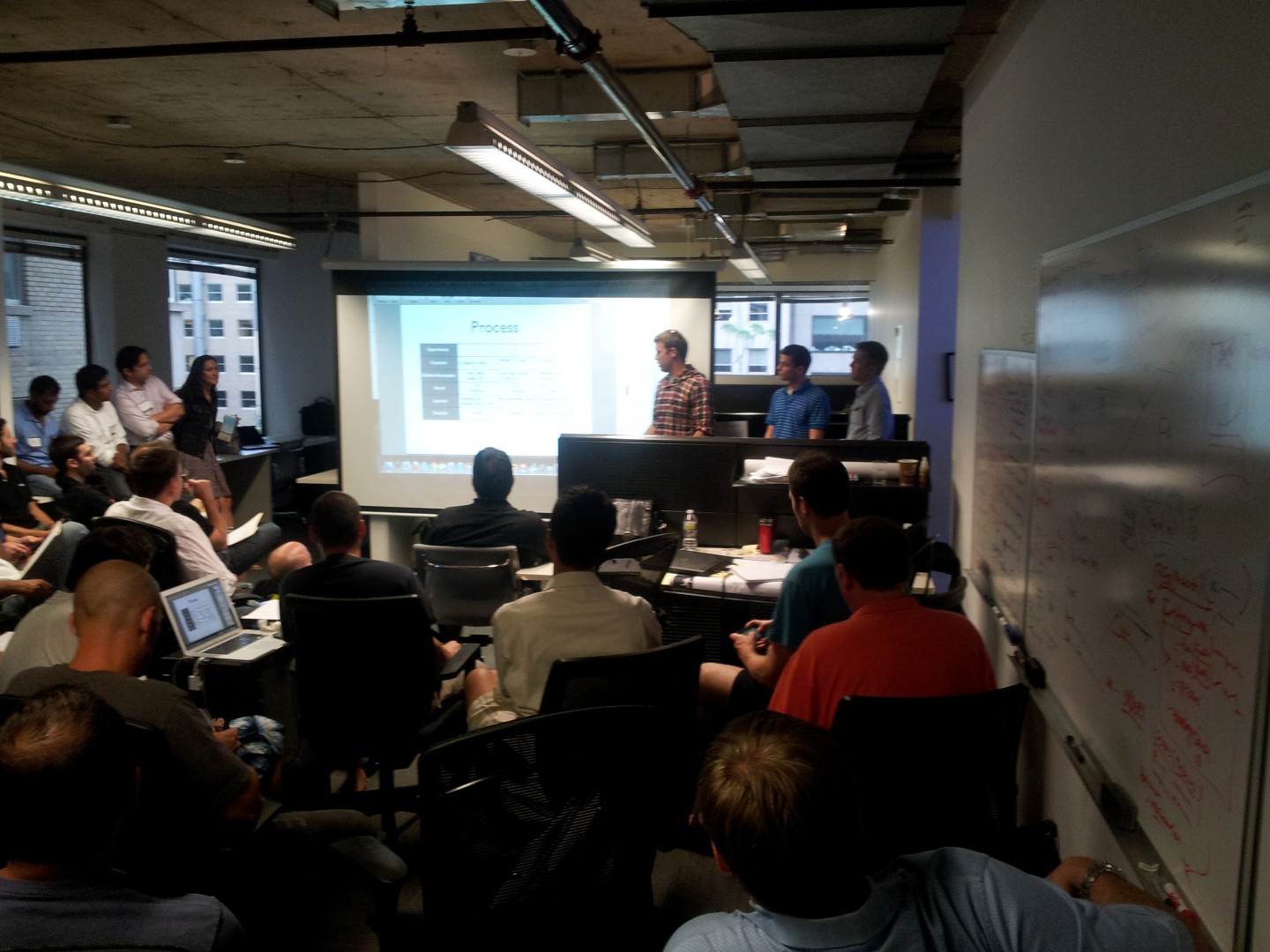


It ends up, the real problem is that being smart just aint cool in the good-ol-US-of-A. So to fix that, students can now aim high, achieve their goals, and get rewarded for it - like, a personal channel and getting to know your favorite celebrity perhaps? Smartly won the top LSM prize by actually not only finding tons of young students and their parents who loved the concept - but actually getting a local celebrity (Jonathan Perrelli) to make a personalized video for a local who had only dreamed of meeting him.
Smartly is also going to integrate with eKita to provide them with the full academic workflow statistics and social graph data they need to systematically reward students for over-achievement. Many celebrities are already eager to help out.

To boost their project up they also received a LOI from yours truly (thats me), as eKita will very much support them by hosting their application on our platform.
Labels: 3DS, cowork, education, edutech, lean, leanstartup, startup, washington DC, workshop
Monday, August 6, 2012
Day 2 of LSM @ DC was intense!
A very, very long day full of action packed lean learning. Some good workshops, one by myself on ideation and techniques of how to use it in customer development; but otherwise a day full of participants getting out of the building and talking to customers, learning, and pivoting fast.
We've got everything from an educational project to help make education cool - a realization after attempting a learning platform that nobody would really use it because getting high grades and being smart in the US culture isnt considered cool. So the pivot is now working towards making high-grades and academic achievement highly rewarded by being able to have private channels of communication with student's favorite celebrities. Want to meet your favorite celebrity? Get straight A's and you will, on Smart-ly.com!
Obviously this is a very interesting project for us at eKita.
There's also group travel buying project Groovel (name change imminent: there's already a groovel.com) who help people looking to travel in groups get it that much cheaper - by group buying the travel and tour packages.
A similar concept to what Elan is doing over at MorePeoplePayLess.com.
Overall we've got about 8 projects here, with some very interesting ideas here that are evolving into solid solutions for painful problems - right in front of our eyes.
With its hyper-drive model of invalidating and validating assumptions about product->market fit and customer->product fit, LSM is definitely a success at making you learn lean!
The only cave-at I have so far about the intense 3-day approach of this is that there are lots of false negatives and false positives in the testing process. Something that I've seen happening here quite alot with teams, and have mentioned to them to keep this in mind: dont necessarily throw away an assumption simply because of a quick street-test that invalidates it!!!
All in all though - learning the techniques and methods is the goal of LSM - and at that, it is excelling incredibly well.
Participants are quickly becoming lean startup machines!


A very, very long day full of action packed lean learning. Some good workshops, one by myself on ideation and techniques of how to use it in customer development; but otherwise a day full of participants getting out of the building and talking to customers, learning, and pivoting fast.
We've got everything from an educational project to help make education cool - a realization after attempting a learning platform that nobody would really use it because getting high grades and being smart in the US culture isnt considered cool. So the pivot is now working towards making high-grades and academic achievement highly rewarded by being able to have private channels of communication with student's favorite celebrities. Want to meet your favorite celebrity? Get straight A's and you will, on Smart-ly.com!
Obviously this is a very interesting project for us at eKita.
There's also group travel buying project Groovel (name change imminent: there's already a groovel.com) who help people looking to travel in groups get it that much cheaper - by group buying the travel and tour packages.
A similar concept to what Elan is doing over at MorePeoplePayLess.com.
Overall we've got about 8 projects here, with some very interesting ideas here that are evolving into solid solutions for painful problems - right in front of our eyes.
With its hyper-drive model of invalidating and validating assumptions about product->market fit and customer->product fit, LSM is definitely a success at making you learn lean!
The only cave-at I have so far about the intense 3-day approach of this is that there are lots of false negatives and false positives in the testing process. Something that I've seen happening here quite alot with teams, and have mentioned to them to keep this in mind: dont necessarily throw away an assumption simply because of a quick street-test that invalidates it!!!
All in all though - learning the techniques and methods is the goal of LSM - and at that, it is excelling incredibly well.
Participants are quickly becoming lean startup machines!


Labels: 3DS, cowork, education, edutech, lean, leanstartup, startup, washington DC, workshop


